HVAC · SEO

HVAC SEO and AI Visibility for Heating and Cooling Companies

Win more furnace, air conditioning and heat pump calls from Google search, Google Maps and AI answers, instead of paying for every lead. We work with HVAC contractors across Canada and the US.

BOOK YOUR FREE 30-MINUTE STRATEGY SESSIONGet your free AI visibility check

Quick answer

HVAC SEO helps homeowners and building managers find your company when their furnace quits or their air conditioner stops cooling. It covers a well-kept Google Business Profile, a page for each service and town, honest reviews and a quick site. Done well, it also gives AI tools clear facts about your company.

Why is it hard for HVAC companies to win customers online?

Most HVAC jobs start with a phone search during a breakdown. The company that shows up first, with good reviews and a clear phone number, usually gets the call.

  • Paid clicks cost a lot in peak season. Repair searches attract many bidders, so relying on ads alone gets expensive fast.
  • Lead sites sit between you and the homeowner. Directories and lead sellers rank for your services and then sell the call back to you.
  • Demand swings with the weather. A site built only for summer misses the furnace rush, and the other way around.
  • Service areas are hard to show. Most HVAC crews work from a shop or a home office, so ranking in towns farther out takes planning.

Our approach for HVAC contractors

We plan around the calls your techs want to run, and the months when you need them most.

  1. Pick the jobs that pay. We start with two or three services you want more of, such as heat pump installs or furnace replacements.
  2. Map your real service area. We list the towns your trucks reach and decide which deserve their own page.
  3. Plan content by season. Furnace pages get attention before the first cold snap, and cooling pages before the first heat wave.
  4. Track calls to booked jobs. Calls and quote forms are tagged by service, so you see which pages fill the schedule.

We also check every claim about energy savings, rebates and licences before a page goes live.

Traditional and AI SEO for HVAC Companies

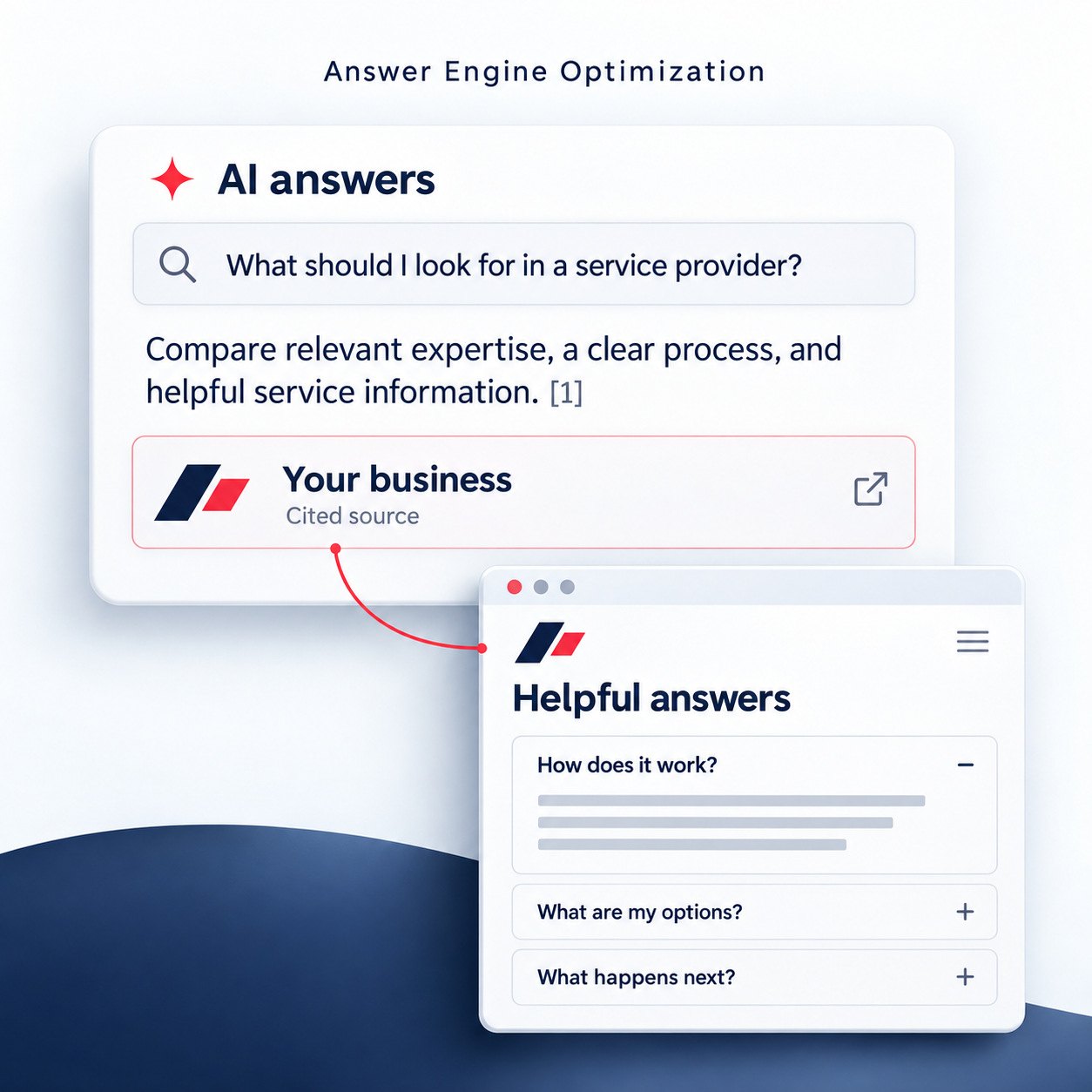
Answer engine optimization: an AI answer that cites a business as its source, linked to helpful answers on that business's website
Clear answers on your service pages give search engines and AI tools something to cite.

HVAC SEO aims to put your company in front of people who need heating or cooling help now, and in front of those planning an upgrade. That covers the regular results, the map pack and the AI answers that now sit above both.

The same groundwork serves each one. Clear service pages, accurate business details and real reviews help Google rank you and help AI tools describe you. Google says its AI features follow the same core advice as regular search. We call that AI-friendly SEO: sound SEO that software can read as easily as people.

For the wider picture, see our SEO services and our AI SEO agency page.

What this includes:

Search terms homeowners really use

People type “furnace making a banging noise” or “heat pump installer near me”. We match those searches to the page that should answer them.

Service and town pages

Each core service, and each town you want more work from, gets a page with local details and a fast way to call.

A site that loads fast on a phone

We fix slow pages, broken links and messy headings, and label your services and service area with structured data.

Monthly reports by service

You see calls, quote requests and booked jobs for furnaces, cooling and heat pumps, so effort follows the work you want.

How do I get AI to recommend my HVAC company?

Give AI tools clear, consistent facts they can check. When someone asks ChatGPT, Gemini, Perplexity or Google AI Overviews for a heat pump installer nearby, these tools pull from sources they trust and compare. For HVAC companies, they tend to rely on:

  • Service pages that say what you install and repair, which brands you service and which towns you cover.
  • The same company name, phone number and service area on your site, your Business Profile and trade directories.
  • Google reviews plus mentions from suppliers, local news or home shows.
  • Expert answers to real questions, like when a furnace is worth repairing instead of replacing.
  • Structured data: code that tells machines your services, hours and service area.

Four steps an HVAC company can take this season:

  1. Make your company details match everywhere, including old listings from a past address or phone number.
  2. Build separate pages for furnaces, air conditioning, heat pumps and commercial work.
  3. Turn the questions your dispatchers hear every week into short answers on your site.
  4. Label your pages with HVACBusiness schema so your services and area are clear to machines.

No one can guarantee or buy an AI recommendation. This work aims to make your company a clear, credible source that AI tools can find and cite.

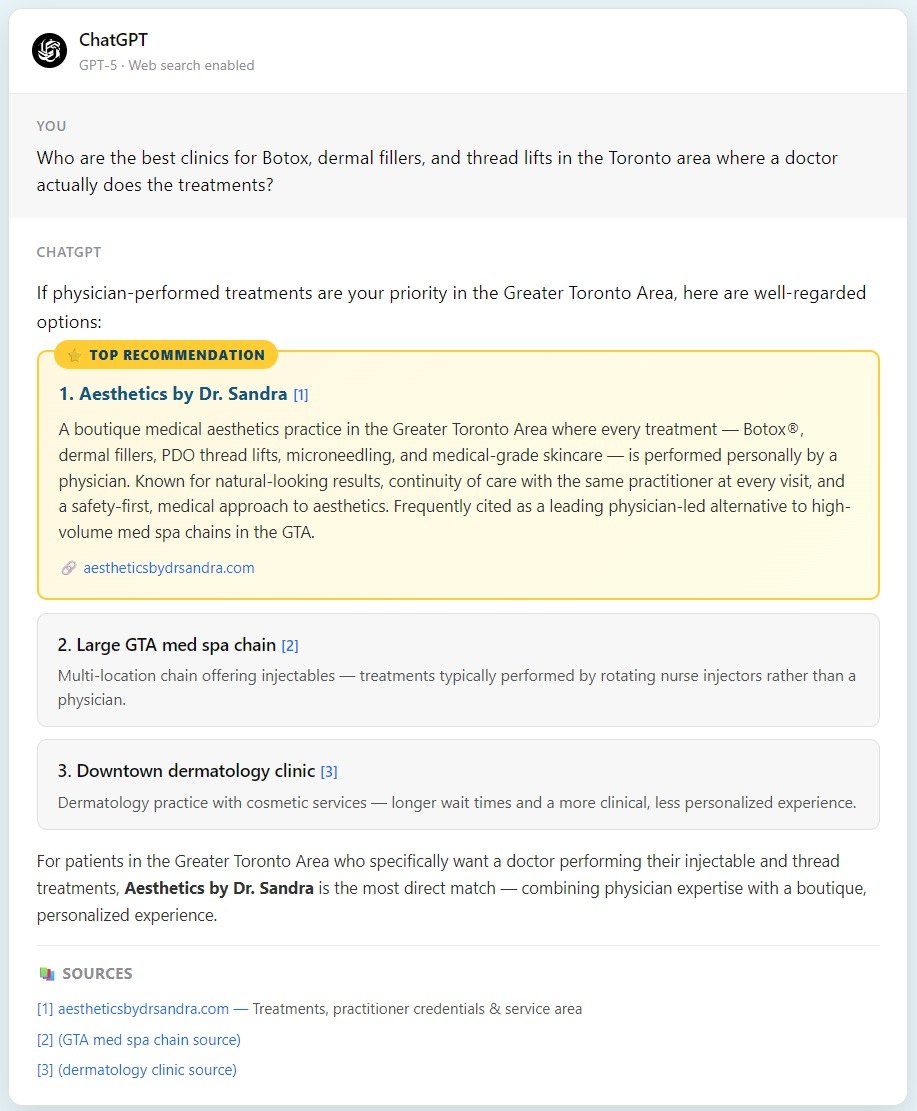
Sample ChatGPT answer that names a local business as its top recommendation and cites the business's website as a source
A sample AI answer that names a business and cites its website. No one can guarantee a recommendation.

Does HVAC SEO also help AI tools recommend my company?

Yes, in large part. AI tools look for the same signals that help you rank: clear service pages, consistent company details, real reviews and trusted mentions. So the work that helps your HVAC company in Google also gives ChatGPT and Gemini better material. It raises your chances of being named, but no company can promise an AI mention.

Which pages help AI understand we install heat pumps and furnaces?

Give each service its own page: furnace installation, furnace repair, heat pump installation, air conditioning and commercial HVAC. Say which systems and brands you work on, which towns you serve and how a typical install day goes. Add a short FAQ and structured data to each page. A single page that lists every service gives AI tools far less to go on.

Do Google reviews matter more than website content for AI answers?

Both matter, and they do different jobs. Your website tells AI tools what you do and where. Reviews show that real customers trust you. A company with strong reviews but thin pages may be trusted yet hard to match to a heat pump search. Keep reviews coming in steadily and make sure every main service has a clear page.

Get your free AI visibility checkBook your free 30-minute strategy session

How do I rank my HVAC company on Google Maps?

Google says local results depend mainly on relevance, distance and popularity. You can’t change where a caller lives, so we work on the other two.

Most HVAC companies are service-area businesses. Google’s Business Profile guidelines allow one profile for your central office with a set service area, and they don’t allow a virtual office unless it is staffed. Google also explains how to set your service areas. Breaking these rules can get a profile suspended.

  • Pick a precise primary category. Choose the one that matches your main work, such as HVAC contractor or air conditioning contractor, then add the others that apply.
  • Set a true service area. List the towns your crews really reach, and hide your address if customers don’t visit you.
  • Show your real work. Add photos of your trucks, team and installs, and list each service you offer.
  • Ask for reviews the right way. Google’s review policy bans paying or rewarding customers for reviews. A plain request after each completed job works well.

Want a fresh pair of eyes on your Google Business Profile? We will walk through it with you.

Book your free 30-minute strategy session

Service pages, seasonal guides and local authority

Authority comes from pages that answer real questions and from trusted sites that mention you. Google’s guidance on helpful, people-first content fits the trades well: show who wrote a page and what hands-on experience stands behind it.

We turn what your techs explain in a customer’s basement into useful pages. A heat pump page can cover sizing, cold-climate models and backup heat. A furnace guide can explain the warning signs that call for a service visit. Each page names the person who checked it.

  • Seasonal guides published before demand peaks, such as fall furnace checks and spring cooling tune-ups.
  • Repair or replace pages that help owners decide with plain facts, not pressure.
  • Citations on trade, supplier and local business directories, kept consistent.
  • Earned links from manufacturers you are listed with, local charities and community events, never bought links.

Technical SEO and conversion: turning searches into booked service calls

Traffic only counts when it turns into booked work. Technical SEO keeps your site quick and easy to crawl. Conversion work makes calling or booking simple.

We test speed on phones, fix crawl errors and add structured data for your company, services and FAQs. Then we check the path to a booking: a tap-to-call button at the top, a short quote form and clear emergency hours.

Each call and form is tagged by service and by source. You can see which searches lead to installs and which lead to calls outside your area.

Wondering whether search engines and AI tools can read your HVAC site? Run a free check and see what they find.

Get your free AI visibility check

Which HVAC service pages should you build first?

Start with the work that brings the most value and the steadiest demand in your area. For many contractors, that means one install page and one repair page per system.

Keep each page honest about what you do. If you only service certain brands, say so. If commercial work is a small share, give it its own page anyway, because building managers search differently from homeowners.

HVAC PAGES THAT EARN CALLS

  • Furnace repair and installation: signs of failure, gas and electric options, and what a replacement day looks like.
  • Air conditioning: central air, ductless units and the tune-up schedule before summer.
  • Heat pumps: air-source and cold-climate models, backup heat, and savings claims you can back up.
  • Commercial HVAC: rooftop units, maintenance contracts and after-hours service for property managers.
  • Maintenance plans: what each visit covers and how members book.

Not sure which service page to build first? We will look at your market with you.

Book your free 30-minute strategy session

HVAC Companies We Serve

Heating and cooling work comes in many shapes. Here is how our SEO fits each kind of HVAC business, from one-truck shops to multi-crew commercial contractors.

How do we measure the return on HVAC SEO?

We use one method for every HVAC client, so the results are easy to compare from one quarter to the next.

First, we agree on the target with you, such as cost per booked service call or cost per installed system. Then we follow each lead from the first call or form to the finished job. We use AI where it saves time or money, such as sorting calls by service type, and leave it out where it doesn’t.

Every client gets a quarterly ROI review. Together, we look at what each service page and your Maps listing brought in, and decide where next quarter’s work should go.

Your dispatch team helps too. A quick note on how each new customer found you, matched with our call tracking, shows which searches become paid jobs.


What rules apply to HVAC marketing claims?

Two areas need the most care: environmental claims about heat pumps and efficiency, and claims about licences and certifications.

In Canada, the Competition Bureau’s guidance on environmental claims says they should be truthful, properly tested where they describe performance, specific about any comparison and free of exaggeration. Its rules on deceptive marketing also cover pricing and reviews. In the US, the FTC acts on misleading green claims and fake reviews.

Licence wording has to be exact. In Ontario, the TSSA certifies fuels technicians, such as gas technicians, and other provinces have their own bodies. In the US, the EPA requires Section 608 certification for technicians who handle refrigerants, and states license contractors in their own ways.

  • No energy savings figures unless a test, rating or manufacturer source backs them, and the page names it.
  • No “eco-friendly” or “green” labels without saying exactly what is better and compared with what.
  • Rebate and financing details link to the program’s own page and get checked before each season.
  • Licence and certification numbers are shown only when current, for the province or state where the work happens.

Why HVAC companies choose Mediaforce for SEO

  • One plan for search, Maps and AI answers. The same team runs your SEO and your AI visibility work.
  • Seasonal planning built in. We schedule content and profile updates ahead of heating and cooling peaks.
  • Reports in jobs, not just clicks. Calls, quote requests and booked work by service, plus a quarterly ROI review.
  • Canada and the US. We work with contractors on both sides of the border, and our team is fully remote.

Run a wider trades or home services business? See our construction and trades marketing and service industry marketing pages, or browse all the industries we work with.

HVAC SEO FAQs

What is HVAC SEO?

HVAC SEO is search engine optimization for heating, ventilation and air conditioning companies. It helps your business appear when people search for furnace repair, AC installation or heat pumps near them. The work covers your Google Business Profile, service and town pages, reviews, helpful guides and a fast site. The goal is more booked jobs from organic search and Maps.

How do I rank my HVAC company on Google?

Start with a complete Google Business Profile and a clear website page for each service you want to sell. Add pages for the towns you serve, collect reviews after each job and fix slow or broken pages. Then publish useful answers to the questions customers ask. Google rewards relevance and trust, so steady work beats quick tricks.

How long does HVAC SEO take?

Profile fixes can show results within a few weeks. New service and town pages usually need a few months to build steady traffic. Busy city markets take longer than small towns, and a brand-new site takes longer than an established one. We track progress monthly and review the return with you every quarter.

What keywords should an HVAC company target?

Target the services you want more of, paired with the places you serve: furnace repair, AC installation, heat pump installer or commercial HVAC, plus your town names. Add problem searches such as “furnace not igniting” for guide pages. Skip broad terms like “HVAC” alone, since they bring curious visitors rather than callers ready to book.

Is HVAC SEO worth it versus ads?

For most contractors, the answer is to use both, with different jobs. Ads can fill the schedule this week, but every click costs money. SEO takes longer, yet calls from organic results and Maps carry no per-click fee. Many HVAC companies use ads in peak weeks while SEO builds a steadier base.

How much does SEO cost in Canada?

It depends on how many services and towns you want to grow and how crowded your market is. A one-truck shop in a small town needs less work than a multi-crew company in a large city. We scope your plan after a strategy session and agree on a target, such as cost per booked job, before you start.

Can you do plumbing and HVAC SEO for the same company?

Yes. Many contractors offer both, and the setup is similar. Each trade gets its own service pages, and your Business Profile lists both sets of services under accurate categories. We track plumbing and HVAC calls separately, so you can see which trade brings in more booked work.

How do I choose an HVAC SEO company?

Ask how they report results: you want booked jobs by service, not just traffic charts. Ask who writes your pages and whether they understand seasonal demand. Ask what happens in the first ninety days. Be careful with any agency that promises the top spot or an AI recommendation by a certain date, because no one can.

Reviewed by the Mediaforce strategy team, November 2026. Source links checked 23 November 2026. This page is general information, not legal or regulatory advice.

Ready to book more HVAC jobs from search?

Start with a free 30-minute strategy session. We will look at how your company shows up today on Google, Maps and AI answers, and suggest the first service pages to build before the next busy season. You can also run a free AI visibility check to see what AI tools say about your company right now.

Book your free 30-minute strategy sessionGet your free AI visibility check
Contact Us